

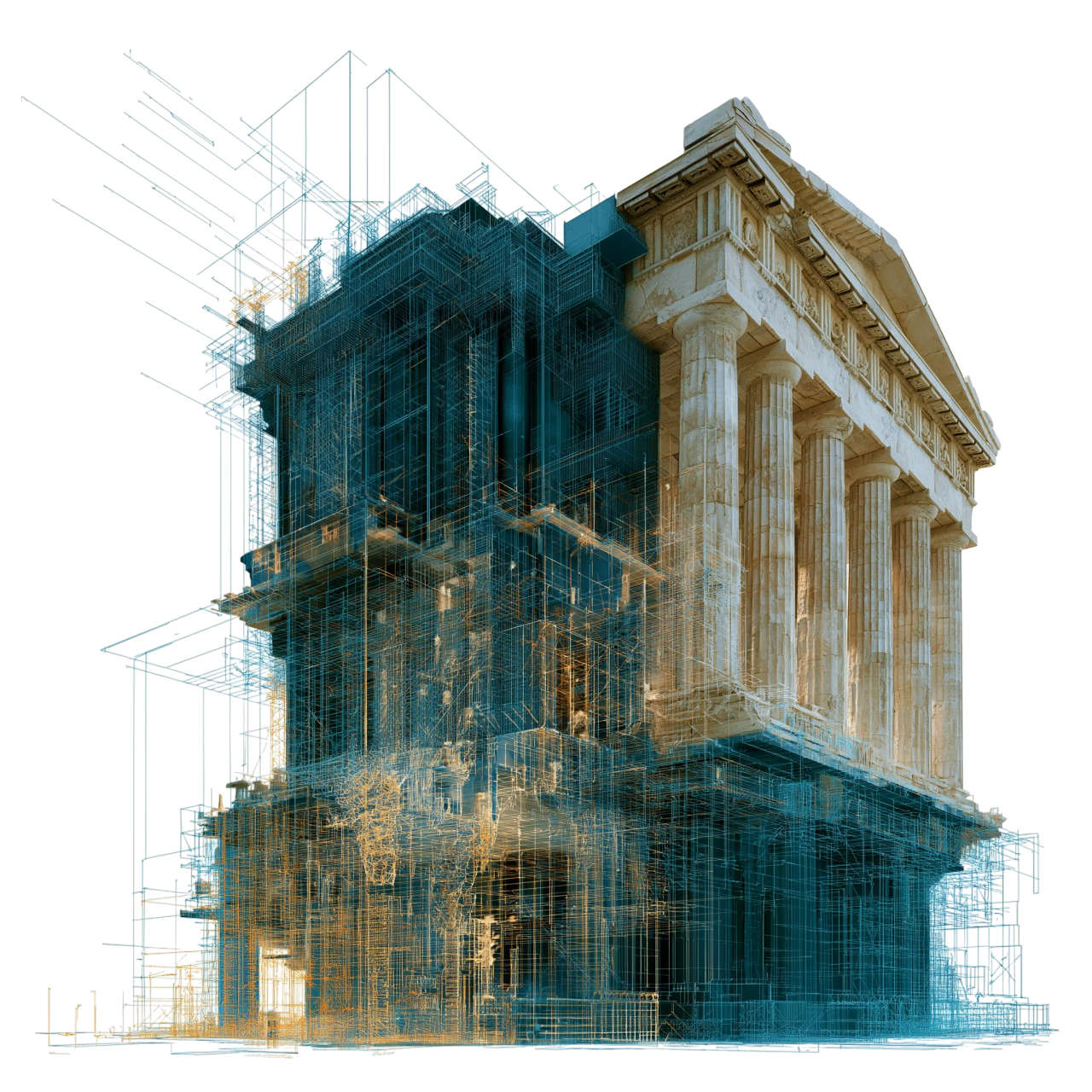

. . "AI is only as powerful as the foundations beneath it" . .
The UK isn't short of people who can build AI models. It's short of people who can make AI work inside a real organisation. That's why "AI architect" has gone from a niche title to a regular one in the architecture market, and why the role is so often misunderstood.
Why demand for AI architects has jumped
Contract adverts requiring an AI architect rose from 17 to 230 in two years, according to IT Jobs Watch (the six months to 18 October 2026, against the same period in 2024). Around one in seven of those adverts mentions enterprise architecture.
The wider market points the same way. PwC's 2026 AI Jobs Barometer found UK specialist AI job postings rose 61% in 2025, from 112,000 to 180,000. The growth came from roles that apply AI within an existing discipline, which grew about three times faster than AI developer roles.
The model was never the hard part. Everything around it is. Organisations have stopped asking whether AI works and started asking how to make it work in their estate, and that's an architecture question.
What an AI architect actually does
An AI architect is rarely the person building the model. The model is usually bought, borrowed or fine-tuned. The job is everything around it:
- Data: where it comes from, who owns it, and whether anyone trusts it enough to put it in front of a customer.
- Integration: how AI connects to systems that were never designed for it, and what breaks when it does.
- Governance: who is accountable for what the system decides, how it is monitored, and how it gets switched off.
- Running cost: what it costs to operate at ten times the pilot's volume, and who pays for it next year.
None of that is new. It's the same set of questions architects have always asked, applied to a technology that moves faster and fails less predictably.
AI architect vs solution architect vs enterprise architect
The titles overlap more than job adverts suggest. On IT Jobs Watch, the most common other title on AI architect adverts is solution architect, at 23.5%. Plenty of "AI architect" roles are solution architect roles with a new label.
A rough way to tell them apart:
- Solution architect: designs a specific AI-enabled solution so it works, integrates and can be supported.
- AI architect: sets the patterns, platforms and guardrails so many AI solutions can be built safely and consistently.
- Enterprise architect: decides where AI should and shouldn't go, how it fits the operating model, and what the estate needs to look like for it to scale.
In smaller organisations one person often covers all three. That's fine, as long as someone is clearly accountable for each.
Why AI pilots stall before production
The pilots usually work. Production is where they stall. Informatica's CDO Insights 2025 survey of 600 data leaders, published in early 2025, found two thirds had moved fewer than half their GenAI pilots into production, and 43% named data quality and readiness as a leading obstacle.
The reasons are rarely about the model. A pilot runs on a clean slice of data, a willing team and a few workarounds. Production means the messy majority of the data, access across systems nobody wants to touch, and governance that was bolted on at the end rather than designed in. It's the work that tends to get deprioritised until the demo has been signed off.
What to look for in an AI architect
The label matters less than the evidence. Look for someone who has taken AI from pilot to production, not someone who has only run proofs of concept. Ask them:
- What did you have to change in the data before it went live?
- How did it connect to the systems around it?
- Who was accountable for it once it was running, and how was it monitored?
- What did it cost to run, and was that in the original business case?
If they can answer those clearly, the title on their CV doesn't matter much.
Our view
AI architecture isn't a new discipline. It's architecture, done properly, for a technology that punishes shortcuts faster than most. The organisations that get value from AI this year won't be the ones with the best model. They'll be the ones that sorted out the foundations underneath it.
If your AI programme needs its foundations sorted before it can scale, see how we approach strategy and architecture.


